
Literary Fiction vs Commercial Fiction: What's the Difference?
Pick up two novels in a bookshop and they can feel like they belong to different art forms. One asks you to slow down, to notice how a sentence is built, to sit with a character who does very little for forty pages. The other catches you on the first page and will not release you until you have missed your stop. Both are novels. Both are fiction. The difference lies in a set of conventions, and in the expectations you carry to the till.
Where the Labels Come From
Literary and commercial are publishing terms before they are reading terms. Agents, editors and booksellers use them as shorthand for how a book will be sold: which shelf it lands on, what the cover looks like, whether it is reviewed in the weekend papers or stacked by the supermarket tills. Neither word tells you anything about quality. Plenty of literary novels are precious and tedious; plenty of commercial ones are put together with real care and precision. The labels describe intent and audience, not worth.
The Markers of Literary Fiction
Literary fiction tends to treat language as the main event rather than the delivery system. You can usually spot it by a handful of habits:
- Prose that draws attention to itself. Sentences are shaped for rhythm and image, not just clarity. You might reread a paragraph simply because it is good.
- Interiority over incident. The drama happens inside a character's head. A whole novel can turn on a single afternoon, a misunderstanding, a letter never sent.
- Ambiguity that is deliberate. Endings may refuse to tidy up. Questions are left open because the questions are the point.
- Structure as experiment. Shifting timelines, several narrators, an unreliable voice, a chapter that reads like an essay.
- Theme at the front. Memory, grief, class, migration, the damage families quietly do to themselves.
- A slower pulse. Tension comes from what is unspoken as much as from any threat.
Kazuo Ishiguro's The Remains of the Day is a useful example. A butler drives across England and, in the gap between what he says and what he means, an entire life of missed chances opens up. Almost nothing happens. Everything happens.
The Markers of Commercial Fiction
Commercial fiction makes a promise early and keeps it. The reader is the priority, and the experience is engineered to be absorbing.
- Plot first. Something happens on page one, and something keeps happening.
- Clear stakes. You know what the character wants and what it will cost them to fail.
- Genre signals. Crime, romance, thriller, historical saga, fantasy, cosy mystery. The conventions are part of the pleasure, not a flaw.
- Resolution. Threads are tied. The killer is named, the couple come together, the wrong is righted.
- Transparent prose. The writing is designed to disappear so the story can take over.
- Momentum. Chapters end on a turn that makes putting the book down inconvenient.
Think of Lee Child's Jack Reacher novels, Marian Keyes's warm, sharp family comedies, or C. J. Sansom's Shardlake mysteries. The craft is real, but it is placed in service of the reader's momentum.
Most Books Sit Somewhere in the Middle
The two categories are poles of a spectrum, not separate countries. Between them lies the territory publishers sometimes call upmarket commercial fiction, or book-club fiction: novels with a proper plot and sentences worth noticing.
Margaret Atwood's The Handmaid's Tale takes a science-fiction premise and treats it with literary seriousness. Gillian Flynn's Gone Girl is a thriller with a voice sharp enough to be studied. Kate Atkinson writes crime novels with the structural playfulness of literary fiction. Sarah Waters builds Victorian sensation plots with twists that would satisfy any commercial reader. Hilary Mantel's Wolf Hall trilogy sold in enormous numbers while collecting the prizes that literary fiction chases.
Reputation shifts, too. A prize shortlisting, a film adaptation or a sudden wave of recommendations can move a novel onto a different shelf with a different cover, years after it was first published.
What the Difference Means for You as a Reader
Knowing the labels helps you match a book to your mood, which is far more useful than matching it to your ambitions.
Reach for literary fiction when you have the attention to spare: a quiet hour, a long train journey, a week when you would rather be unsettled than comforted. It rewards patience and rereading. It rarely rewards being read in five-minute bursts with a phone buzzing nearby.
Reach for commercial fiction when you want to be carried, when you are tired, or when you need a story to do the heavy lifting for you. That is not a lesser pleasure. A well-built plot is genuinely difficult to construct, and the best commercial novelists are engineers of suspense.
The mistake is treating one as virtuous and the other as guilty. Readers who stay only in literary fiction miss a great deal of craft. Readers who stay only in commercial fiction miss what a sentence can do when it is allowed to slow right down.
How to Tell Which Camp a Book Belongs To
Before you buy or borrow, try this quick sequence:
- Read the first page. If the
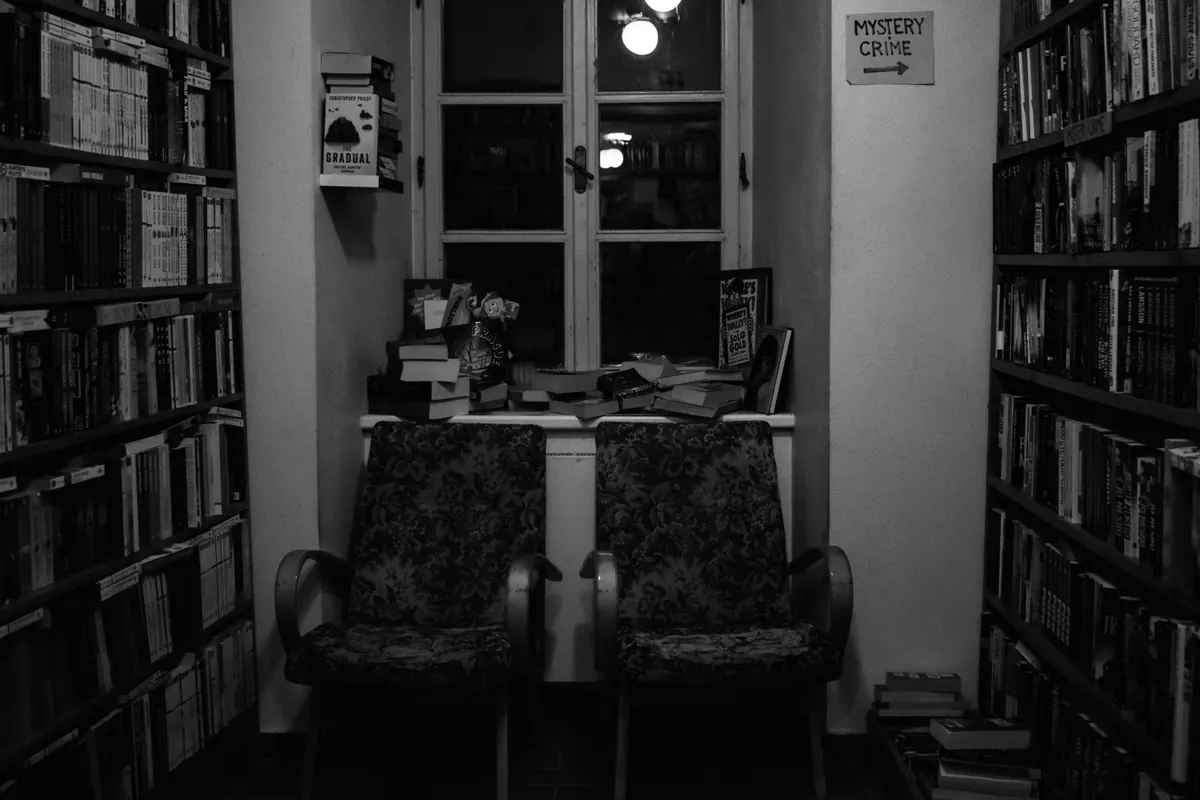
Photo: JillWellington / Pixabay
Common Mistakes New Book Club Members Make (and How to Avoid Them)
New to a book club? From skipping the reading to hogging the conversation, here are the missteps that...

A Reading List for Exploring British Landscapes: 12 Nature Writing Classics
Twelve British nature writing classics arranged by landscape — moorland, coastline, woodland and city...
About Us