
Autumn Reading List: 10 Cosy Books for Darker Evenings
There is a particular kind of October evening when the light goes early, the radiators click on, and the thought of going out after six seems faintly ridiculous. This is reading weather. Not the ambitious sort, either: the dense history and the prize-winning novel you keep meaning to start can wait until January. Autumn asks for something warmer. A book that meets you where you are, whether that is under a blanket with a mug of tea or propped against the kitchen radiator while something bubbles on the hob.
The ten books below all do that job well. They are not all cheerful, and a few are properly sad in places, but none of them will leave you wrung out. Each entry comes with notes on mood, pace and setting, so you can pick something to match the evening you are actually having rather than the one you planned.
What Actually Makes a Book Comforting
Cosy is a slippery word, and it is not the same as twee. Barbara Pym and Stella Gibbons are both sharp as tacks. What these books share is a pace that does not demand much from a tired reader, a voice you would happily listen to for hours, and settings full of weather, food, rooms and walks. Their characters are decent even when they are foolish, and their endings do not punish you for having spent the evening with them.
Length matters too. November and December fill up fast, so a book you can finish in three evenings beats one that turns into a chore by page ninety. Every title here comes in under four hundred pages, and two are barely more than a hundred.
The Ten Books
Bright, Comic, Finish-in-a-Weekend
Miss Pettigrew Lives for a Day — Winifred Watson. A down-on-her-luck governess arrives at the wrong address, is mistaken for a maid-of-all-work, and spends a single day untangling the love life of a nightclub singer. Fizzing, generous and very funny, and it happens almost entirely indoors. Mood: effervescent. Pace: brisk. Setting: London, 1938.
Cold Comfort Farm — Stella Gibbons. Flora Poste, orphaned and short of money, moves in with the Starkadders and sets about improving them. It is a parody of the gloomy rural novel, so it helps if you have read one, though it works perfectly well without. Mood: dry and delicious. Pace: quick. Setting: a Sussex farm in the 1930s, all mud and brooding.
84, Charing Cross Road — Helene Hanff. Twenty years of letters between a writer in New York and the staff of a London bookshop, beginning in 1949. Short, funny and quietly moving as the friendship deepens. Mood: affectionate. Pace: bite-sized; ideal for ten minutes before sleep. Setting: a desk in New York and a shop on a London street.
Wry, Slow and Slightly Melancholy
Excellent Women — Barbara Pym. Mildred Lathbury, a clergyman's daughter in her thirties, watches her neighbours' lives while her own stays quietly on hold. Very little happens and everything happens. Mood: wry, understated, faintly sad. Pace: slow, in the best way. Setting: post-war London, jumble sales, Lent and weak tea.
Persuasion — Jane Austen. Anne Elliot and Captain Wentworth, eight years after she was persuaded to refuse him. The most autumnal novel Austen wrote: long walks, wet leaves, small rooms and second chances. Mood: tender and melancholy, with a genuinely hopeful ending. Pace: deliberate. Setting: Bath, Lyme and the English countryside in November.
A Month in the Country — J.L. Carr. In 1920 a shell-shocked veteran arrives in a Yorkshire village to uncover a medieval wall painting in the church, sleeping in the bell tower. Barely 120 pages. Mood: elegiac, gentle, quietly joyful. Pace: unhurried. Setting: hayfields, church stone and a summer that reads like a held breath.
Families, Villages and Growing Up
I Capture the Castle — Dodie Smith. Cassandra Mortmain, seventeen, keeps a journal in sixpenny notebooks while her family lives on almost nothing in a rented castle. The opening line about the kitchen sink is one of the best in English fiction. Mood: tender, funny, hopeful. Pace: gentle. Setting: rural England in the 1930s, all cold baths and borrowed dresses.
Cider with Rosie — Laurie Lee. A childhood in the Gloucestershire village of Slad in the 1920s, told in vivid short chapters. It works beautifully as one chapter a night. Mood: nostalgic without being sugary, funny, occasionally bleak. Pace: episodic. Setting: a cottage, a lane, a schoolroom, a cider orchard.
For the Darkest Evenings
The Wind in the Willows — Kenneth Grahame. You know the story; the point here is the chapters. "Dulce Domum", in which Mole smells his old home and Rat insists they stop, is arguably the most comforting passage in English children's literature. "Wayfarers All" catches the restlessness of early autumn precisely. Mood: safe and slightly wild at once. Pace: episodic, made for reading aloud. Setting: a riverbank, a wood, a warm kitchen.
The Guernsey Literary and Potato Peel Pie Society — Mary Ann Shaffer and Annie Barrows. Letters fly between a London writer and the residents of Guernsey in 1946, uncovering what the Occupation did to them. Warm and sad in equal measure, with a good heart and a great deal of cake. Mood: companionable. Pace: gentle and easy to pick up again. Setting: an island just after the war.
Match a Book to Your Mood
If you cannot decide, start here:
- Two free hours and low spirits: Miss Pettigrew Lives for a Day, or 84, Charing Cross Road.
- Wry rather than funny, and no rush at all: Excellent Women.
- Short enough for a busy week: A Month in the Country.
- Reading aloud, to a child or to a room: The Wind in the Willows, then Cider with Rosie.
- A fortnight to sink into: I Capture the Castle or The Guernsey Literary and Potato Peel Pie Society.
- Beautiful sentences about weather and regret: Persuasion.
- Something absurd and cheering: Cold Comfort Farm.
Making the Evening Work
A few practical notes, because the right book in the wrong conditions is still a struggle.
Sort the light first. A lamp beside the chair beats the overhead bulb every time, and it is worth checking the bulb's warmth before the clocks change. Keep the book somewhere you will see it: on the arm of the sofa, in your coat pocket, next to the kettle. Two or three short sittings a day add up faster than one long, postponed one. Put the phone in another room; the point of the exercise is an unbroken half hour.
If a book has not caught you by fifty or sixty pages, put it down without guilt. Autumn is not the season for ploughing through. And keep a small notebook or a blank page at the back for lines worth returning to, which is how a reading list becomes your own.
One last thing. If the shortening days leave you flat rather than merely sleepy, that is worth mentioning to your GP rather than treating with another novel. Books help, but they are not the whole remedy. Otherwise: fill the kettle, claim the good chair, and begin with whichever title above you already own.
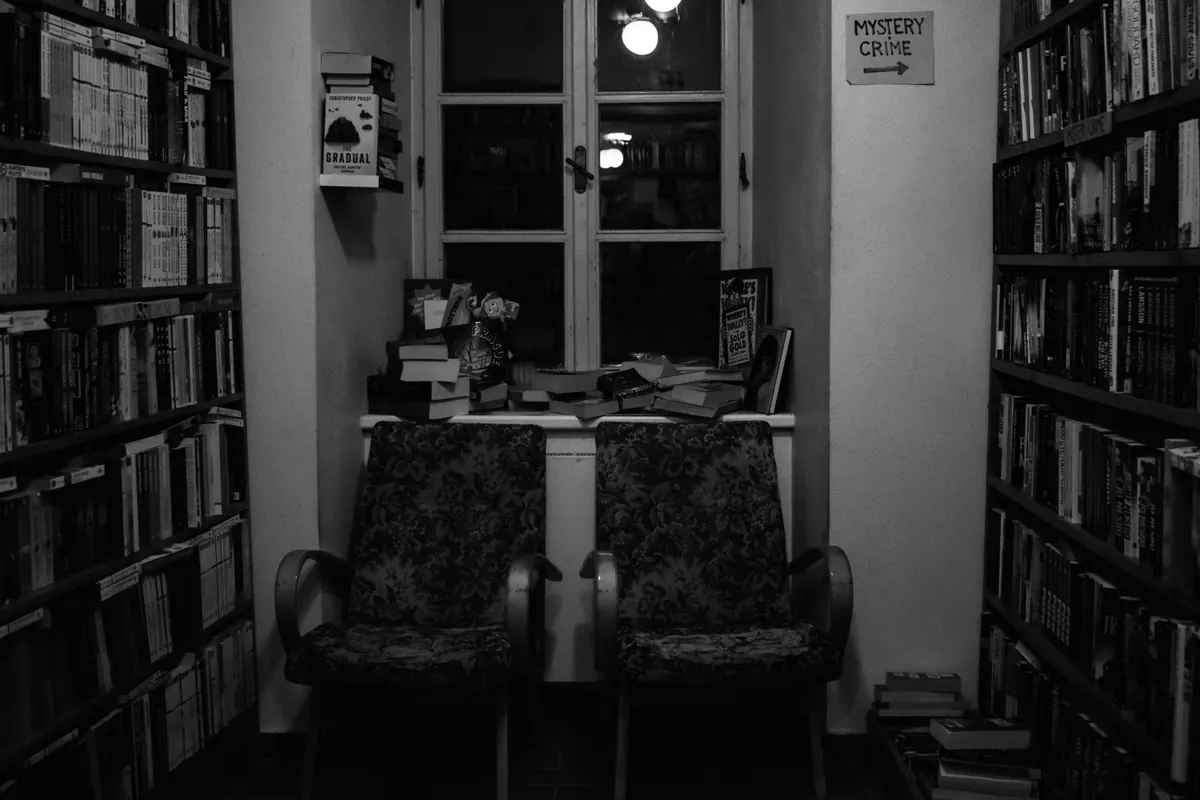
Photo: Tomasz Filipek / Pexels
Common Mistakes New Book Club Members Make (and How to Avoid Them)
New to a book club? From skipping the reading to hogging the conversation, here are the missteps that...

A Reading List for Exploring British Landscapes: 12 Nature Writing Classics
Twelve British nature writing classics arranged by landscape — moorland, coastline, woodland and city...
About Us